How to Plan a project HLD LLD

Planning and Designing a Project: Dev Tinder
We're going to discuss the first steps in project development—planning and design. The project is Dev Tinder, similar to the classic Tinder app, but here, developers swipe profiles instead of dates. It’s like a coder’s version of matchmaking!
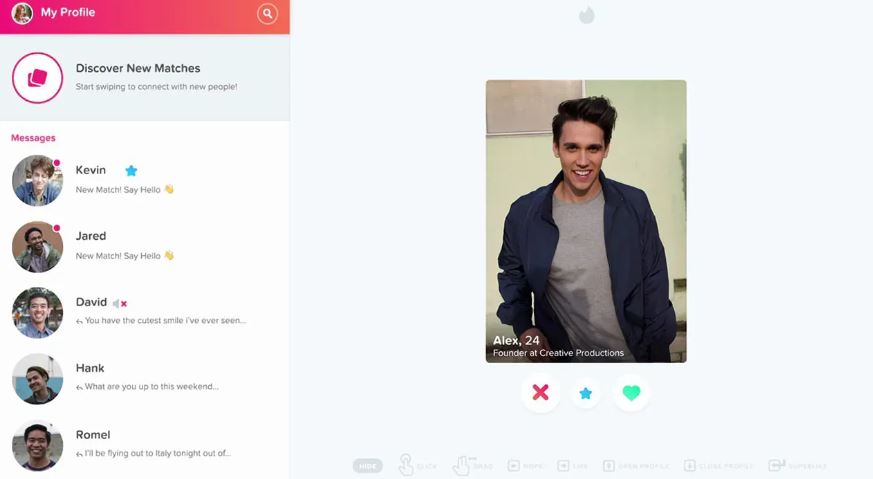
Just like regular Tinder, you sign up, create a profile with preferences and photos, and then start swiping cards left and right. Instead of matching dates, though, it's all about developer profiles, chats, and collaborations. It's Tinder for coders—fun, right? Let's swipe right on code matches! 😄
If you're writing out the steps for Dev Tinder, here's a structured plan:
- Create an account – Sign up for a new account.
- Login – Access the app with your credentials.
- Update your profile – Add preferences and profile photos.
- Explore profiles – Browse through the feed of developer profiles.
- Send connection requests – Swipe right to connect with others.
- Receive connection requests – View matches from those who connected with you.
- See sent requests – Check who you’ve requested connections with.
- Update profile and logout – Manage settings and log out.
You can keep adding more features beyond this, including custom notifications, chat features, and developer-specific tools.
After this, the tech team steps in to plan out the technology stack for the project. We will decide whether to use Monolithic or Microservices architecture. If you don’t know what Monolithic and Microservices architecture are, check out Microservices vs Monolith - How to Build a Project.
Tech Plan
We will use Microservices architecture, and here’s the plan:
- Frontend: React.
- Backend: Node.js and MongoDB.
You can list other security-related things as part of the planning process.
Once these things are done, the tech team moves in, but before that, developers work on LLD (Low-Level Design). If you plan well, writing code will be a breeze.
LLD: Low-Level Design
From the backend perspective, two major things are important:
- DB Design
- API Design
DB Design
Let's talk about DB Design. You will create a collection called User Collection:
-
User Collection:
- Name
- Gender
- Address
- Phone number
- Email ID, password, and many more
Similarly, you will keep creating collections, but make sure to establish relationships between collections to avoid unnecessary work and database usage.
- Connection Request Collection.
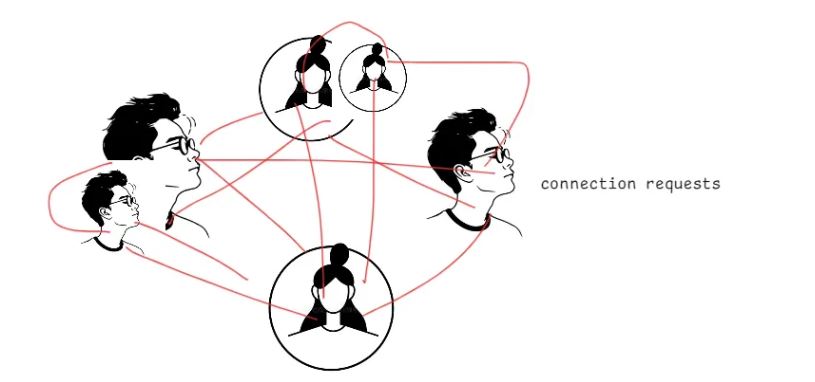
You know that users will send requests to each other, so you will need a Connection Collection to track who is sending requests to whom, how many requests one person has, and the status of those requests. What are the staus can be there , Accepted Rejected Ingnored ,Blocked, Pending and what ever you need you can put that feature in. As per your requirement you can change design , not full design but slightly you can.
API Design ( Rest APIs)
First, let's understand API: It stands for Application Programming Interface, which is a set of rules and protocols that allow different software applications to communicate with each other. Think of it as a bridge that lets your app interact with another app or service. There are different type of requests the server and client communicate over HTTP using standard methods like GET, POST, PUT, DELETE and PATCH
What is the difference between PUT and PATCH
*The main difference between PUT and PATCH is that PUT replaces an entire resource with a new one, while PATCH only updates a resource partially*
List of APIs
Here’s the list of APIs we'll implement in our project:
-
Signup:
POST– Create a new user. -
Login:
POST– Authenticate the user. -
Profile:
GET– Retrieve profile information.POST– Create a user profile.PATCH– Update user profile.DELETE– Remove user profile.
-
Connection:
GET/DELETE/POST/UPDATE– Manage connection requests.
These APIs follow the basic CRUD operations (Create, Read, Update, Delete), which are fundamental to web development. You can explore more about CRUD here.
That's all for this topic! I hope next time, before you start your project, you'll follow this process for smoother development. Let's begin our journey—take care and goodbye for now! See you soon!
Continue Exploring
Want me to write notes on a course?
Tell me the course, book, or research topic you want covered. If it helps learners, I'll consider adding structured digital notes for it in the garden.
Have a notes collection to feature here?
Do you have open notes you want featured in this digital garden? Let me know — we can collaborate and publish them for learners worldwide.
Reach out on Topmate: topmate.io/aat
Contact to Collaborate