AI Evolution: From Turing to Agentic AI

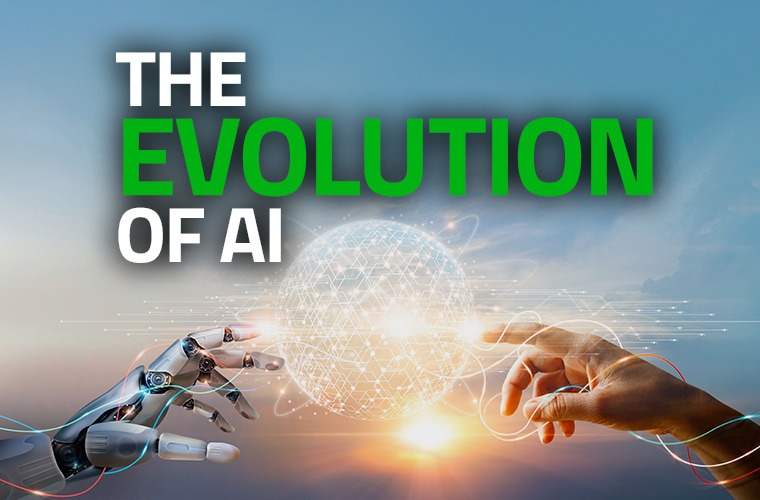
Now let's discuss from where it began — the seed before turning into the vast forest.
If you look at the top 10 companies having the largest market cap in the world, 99% of them are just investing lots of money in AI. Who will go first to win? Who will release a new model in an efficient way, and much more. So much research is going on, Coding Gen, Video Gen, Image Gen, so in all areas they are trying to be the hero. So why are we lagging? As students or as working in an organization, let's learn and be the hero.
So here let's discuss about where it all started.
What is Artificial Intelligence?
When we say let's make machines intelligent, like recommending movies, driving a car, writing poems, making my notes from the video I learned it from in my way, generating an image where I am with Salman Khan, these are intelligence or work we as humans do, and when a machine, a computer, or system algorithm does this then it is called Artificial Intelligence, because it is not manual. It did not really happen artificially; a machine is now capable of doing this.
So AI is a science of making machines perform tasks that normally require human intelligence.
Don't think AI will read all notes and courses and make you land in a job, no no, you will be always there, so keep learning haha. Joke apart, let's continue….
History of AI
So computers existed long back, around 90 years ago also we had computers where we do things.
It all started in 1950. That time many scientists were doing research: can a machine think? Because computers were there performing things. So there was a mathematician named Alan Turing who started researching and making machines capable. Can a machine think? He developed a Turing Test. Let me explain what a Turing Test is.
Suppose there are two rooms, Room 1 and Room 2, and one more room, a Judge room. Where humans exist and those two rooms have one machine and one human. So the judge, who is human, asks the same questions to those two rooms, from the machine and human, and gets one answer from those two rooms. The judge needs to decide who is human and who is machine based on the answers. If the judge is not able to do this, then that means the Turing Test is passed.
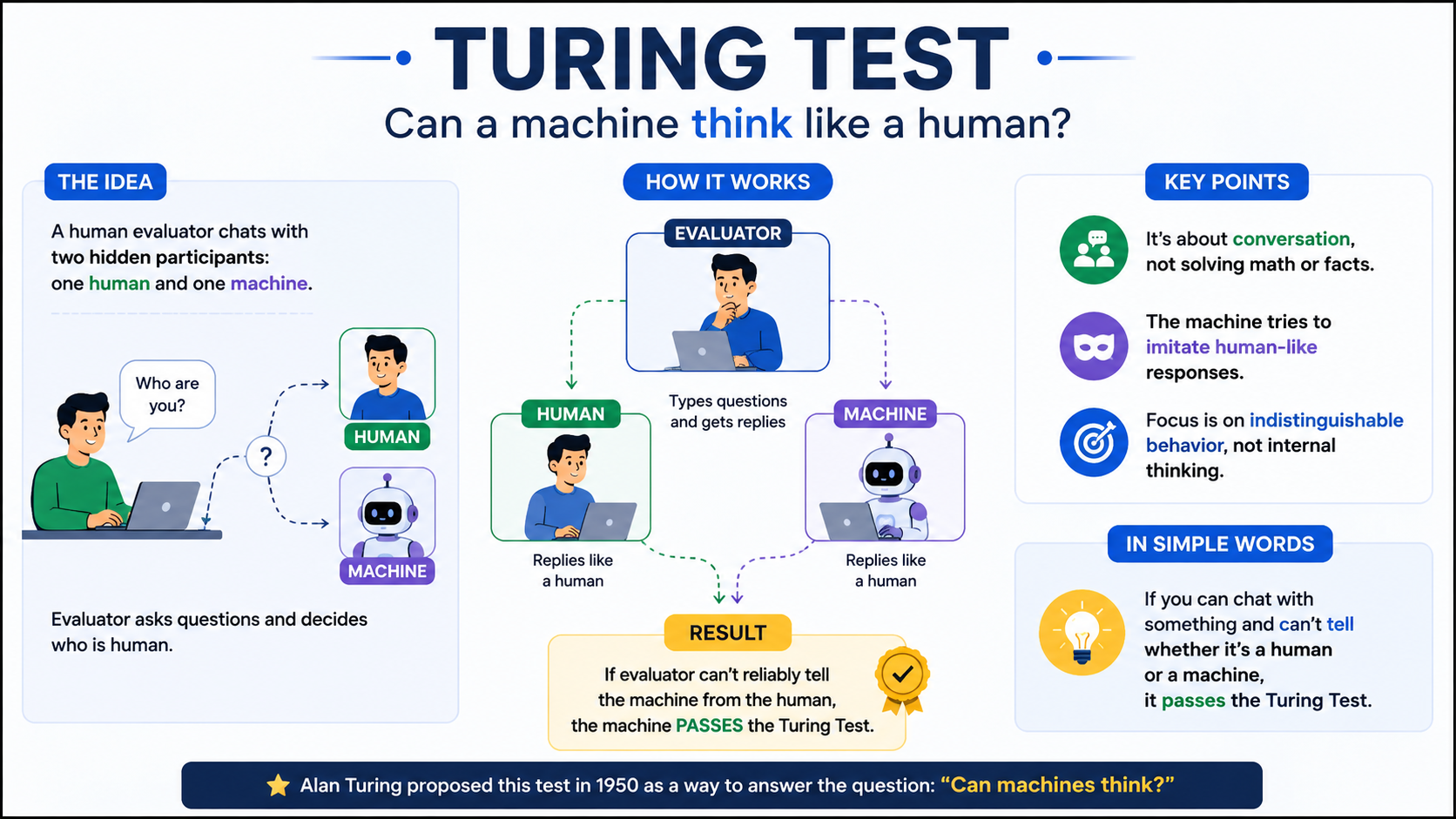
Ref: Turing Test video
But in 1950, there was no AI word. By 1956, John McCarthy, a computer scientist, named the word Artificial Intelligence. Then some researchers came together to see the possibilities and with an ambition believed:
Every aspect of learning and intelligence could in principle, be described precisely enough for a machine to simulate it
There was so much roller coaster in the history. There was an AI winter also, where no one was talking about this from 1987-1993. 1986 synthetic learning, 1997 — this question raised again. Synthetic intelligence research was about machines learning from itself, and different things were going on.
Read more here: Synthetic intelligence (Wikipedia)
Read this blog as well: Synthetic intelligence — alternative or future of AI
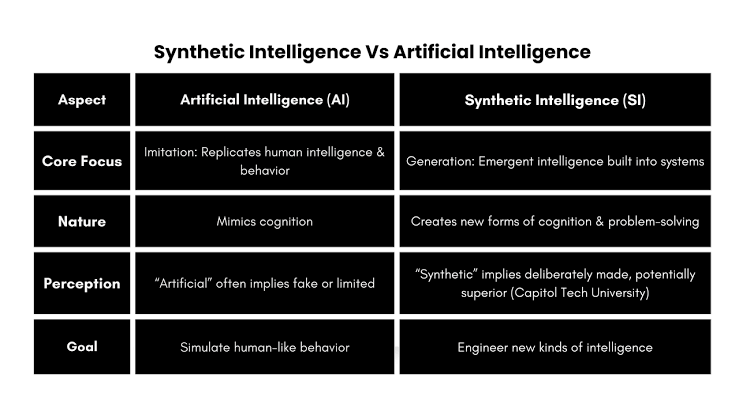
Currently, the situation AI is going beyond the human intelligence. Is it synthetic intelligence? We are using the word AI, but this is all synthetic intelligence. We are going beyond. ChatGPT, we use it, it's real, not fake, name is artificial but it is possible. Now you check and learn about it, let's move next.
In Deep Blue, [IBM Software] defeated Garry Kasparov, AI chess champion. Have machines become smarter than humans? Deep Blue was not an Artificial Intelligence but a system that was designed based on permutations and combinations of what can be the best possible move in chess. But that was a big thing happening after 30 years ago. We are taking that example.
1950-1980 Rule-Based AI
Intelligence was simply a collection of rules, 100s of if-else rules, that make a machine decide things.
For example, detection in a mail body: if a lottery dollar FREE, then mail can be spam. So based on conditions, a machine or algorithm can decide the next step to flag anything, and these machines are known as Expert Systems, and then there was AI winter.
Rise of Machine Learning
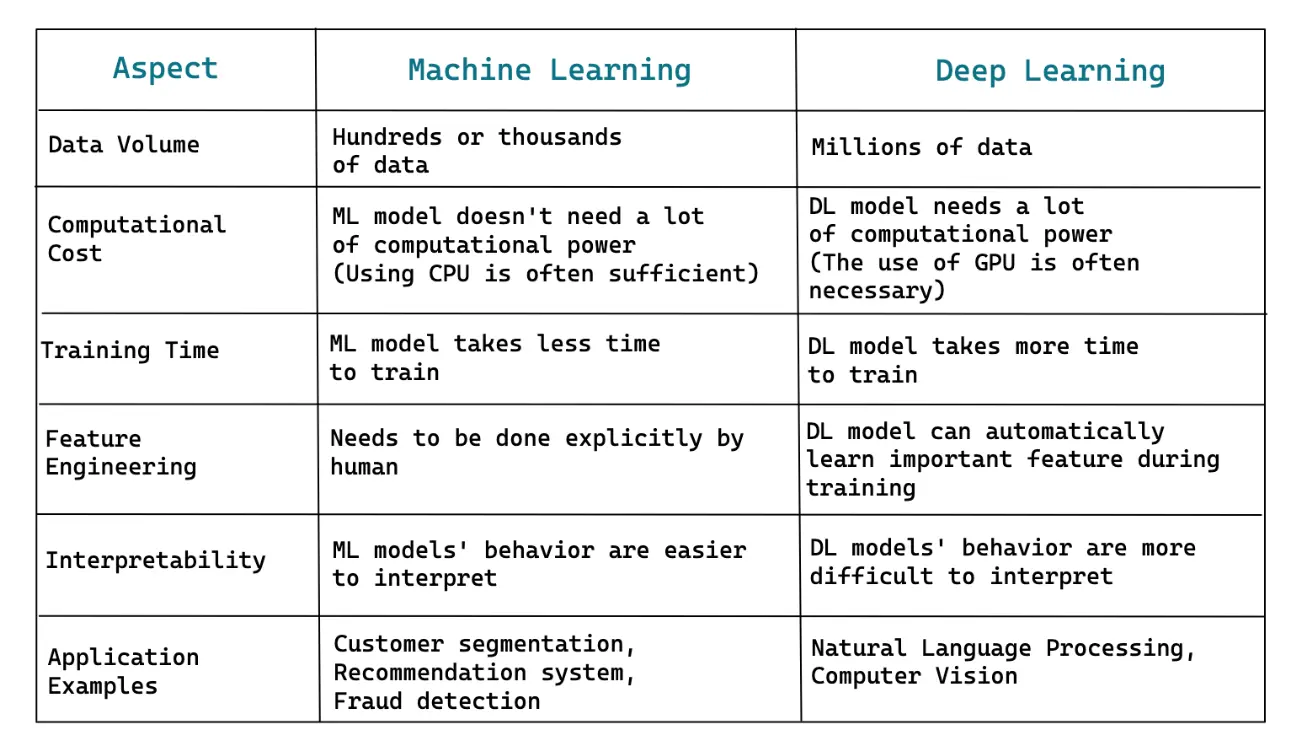
Till now everything was rule-based to make machine intelligence, but that was not working way. Anyone can write things in a different way to do the spamming, the rule-based things will fail. Not possible to write all conditions. That's why machine learning came into the picture.
Like machine can identify the difference between dog and cat. Machine can identify. A machine is trained on 10 lakh images of dog and cat, then machine can understand now based on training data given to them, based on dog and cat. So machine was able to make prediction.
Like give an animal pic, machine can decide whether that is cat or dog, so machine started learning patterns. So we provide training data, but human observation is required. Machine learning was not enough for all possibilities.
Deep Learning
This was the concept of neural network. Can machine think and learn themselves? So scientists started learning and researching on human brains, and human brain has neurons, and the way we think can machine also think? What if we can make connection like neurons of information, called Deep Learning.
This was the breakthrough. Can computer recognize a cat, recognition of faces, speech recognition based on tone and all, phone face recognition. Like machine can predict based on pattern.
This was all possible because of deep learning. There was skilled training as well, but it was different kind of neural networks, RNN, KNNs also, right? So there is chapter, if you have time you can learn. If you want to learn, go check ML courses and books are there. Here we are focusing on history and usage of that.
Deep learning leads to GPU revolution, Internet became vast, and it helps to collect data, and neural network can take more data now to train, so better algorithms. And less data on the internet and in bucket was also a reason of winter of AI.
So Deep learning is a subset of ML focused on teaching computers to learn and make decisions by processing data through neural network inspired by human brain.
Computer Vision Revolution
In parallel, Computer Vision was also taking shape. There was ImageNet, and in 2012 a large neural network got trained on ImageNet dataset. I read the full ImageNet database contains over 14 million high-resolution images divided into more than 20,000 categories. In 2012 Alex Krizhevsky & team built AlexNet, a deep neural network. It made machine identify images, image recognition. As a result of this, face unlock, self-driving cars, X-ray recognition, shopping app identifies products, and as a result machine can see.
Now overall we had that capability. I know this deep learning, why called deep, you can search online and get the result. Here we are just getting familiar with the term and thoughts. So yeah, let's continue.
NLP Natural Language Processing
People used to think text data is easy and other types, image and audio and video are complex data sets, but because text itself a large data set, it's hard to understand and crack and train upon. Let's take an example, read this sentence:
I saw a man with a telescope
So there is two meaning of this sentence, I saw a man and that man has a telescope, or I saw a man but I am using the telescope. So it's confusing.
2nd example is:
River bank and Bank of India
Now machine can also get confused. The same word bank refers to different things in just two words, so the English sentence itself is tough for a human as well, machine had to use to make that training.
So context differs, meaning differs. But nowadays ChatGPT and new-age models understand everything, so what we see is result of time also.
In NLP, Bag of Words, n-gram, RNN (Recurrent Neural Network), LSTM (Long Short-Term Memory) are theories and also techniques used for NLPs. RNN was the major breakthrough that made large sentences make machine understand, and later LSTM made that more enhanced, understanding more than a page. But here was issue with 100s of pages, connecting dots was very tough.
Transformers (2017)
Transformers are the most remarkable creation of history of mankind.
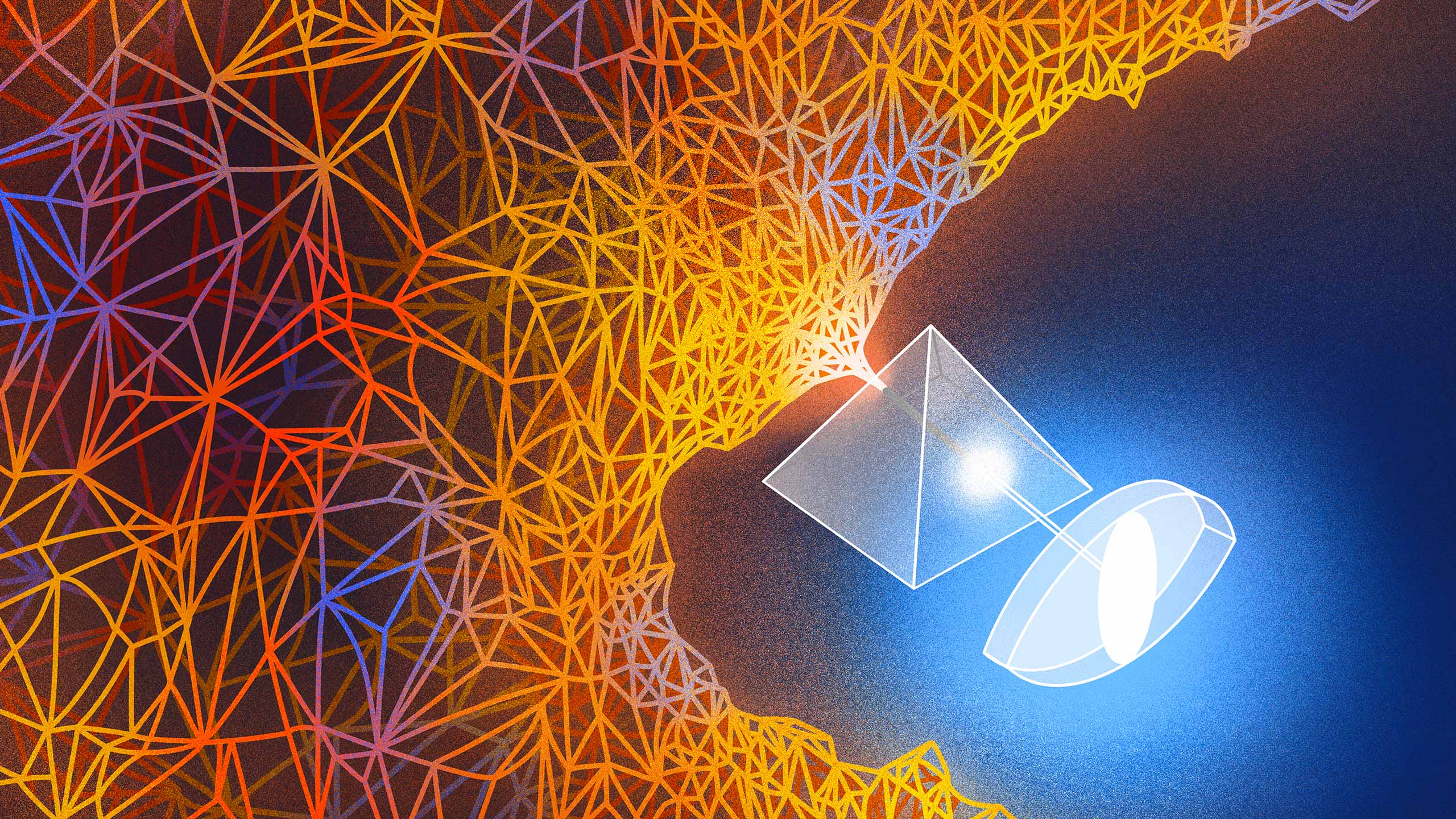
ChatGPT, DeepSeek and whatever new AI things you see, it's all possible because of Transformers only, and this is one kind of architecture we will discuss properly. The Google engineers researched hard and released a research paper named Attention Is All You Need, and whatever model, GPT model you see, all based on this concept.
Context and Gen AI is all possible because of this architecture only, so 2017 research changed everything.
When we provide example: Lion did not cross the river because it cannot swim, and 2017 was the year when model started reference and context of the sentence. In this case, it is referring to the lion, dots started connection. LLMs were only possible because of this.
Read research paper here: Attention Is All You Need (PDF)
Large Language Model (LLM)
LLM is nothing but a transformer which is trained on very, very, very X100 large data, that understands your query. LLM was only possible because of large data sets, GPU machines, heavy systems, computation power needed to train that.
So data and computation power, GPU is two main factors having a LLM model. And countries which are lagging, having their own AI, they are weak on LLM, because it's cost intensive, not many countries have so much resources. Check on internet how much cost it includes to make this possible.
Generative AI
In earlier days AI had different sections, like this AI can do Classification, this type of AI can do Prediction, this LLM or AI is only doing Recommendation. But modern time, AI is able to generate things, like poems, songs, fully copyright-free content, like new images, videos, the faces that we never assumed and never existed on earth.
So Gen AI is nothing but a model that generates the thing. And a multimodal model generates multiple things, Documents, videos, audio, text and images, and this is what the concept of Generative AI is. Before, we had to just relate things and give to us. Nowadays we can write a full code of a project using our idea. So it's not limited to helping only, doing generating also.
The ChatGPT Moment Nov 2022
Sam Altman released ChatGPT in Nov 2022 and revolution happened. Machine can do conversation, we can chat, and in 2022, public started using it. 2017 to 2022 all were like who will release, make these models available to the users, and in 2022 Sam Altman did this.
And ChatGPT becomes the most downloaded app in world history, and still race is going on, who will create the best model for our use case, and we as engineers continue that use case, making our work easy.
We will discuss about RLHF and Memory later. Memory is nothing but context, how much our conversation is remembered by the model we are using.
So ChatGPT was the first. After that Gemini came, Grok came, DeepSeek came, Claude came.
AI Today
Earlier no AI could do so many things. Everything what we could do before:
Thinking, Call API, Plan, Write API, Understand, Remember, Search web, Working autonomously.
Use tools, complete tasks, write code, debug code, deploy, test it and so many things.
But this is not something you need to worry about and learn so that nobody will replace you. Now we are superpowered with things, so don't sit, else someone else will go ahead of you.
Agentic AI 2025
Now we are living in 2026 and last year it was all about Agentic AI, and all we will discuss things in details in this later.
Let's recap the things:
1950 – Alan Turing
1956 – John McCarthy
50s–80s – Rule-Based AI
1997 – Deep Blue defeats Garry Kasparov
90s – Machine Learning
2000s – Deep Learning
2012 – AlexNet
2016 – AlphaGo beats Lee Sedol: watch this video for more
2017 – Transformers (Attention Is All You Need)
2022 – ChatGPT
2025+ – Agentic AI
There is also one document by DeepMind by Google, AlphaGo, you can watch:
Industry Next Actions
And we are applying to every possible industry.
That's all we see. See you later. Thanks.
Want me to write notes on a course?
Tell me the course, book, or research topic you want covered. If it helps learners, I'll consider adding structured digital notes for it in the garden.
Have a notes collection to feature here?
Do you have open notes you want featured in this digital garden? Let me know — we can collaborate and publish them for learners worldwide.
Having a doubt? Ask a query?